Tuesday, March 29, 2016

Week 8 Post

The environmental factor of cold can disrupt homeostasis in humans in several different ways.  The heat can directly affect homeostasis by decreasing a person’s body temperature.  Indirectly, the cold can disrupt a person’s homeostasis by freezing up water sources and killing off food sources which would be necessary in maintain a functional balance.  All of these things can disrupt homeostasis in human beings.
Humans can have a short term adaptation to the cold by having goose bumps.  The goose bumps are short term and they raise the body’s hair to create some sort of insulation from the outside environment.

Humans can adapt to the cold by conserving the body’s heat for the vital organs.  This facultative adaptation allows for the body to function in cold temperatures.  The body does not spend heat on our extremities because they are not essential for life. 

As the professor listed, a developmental adaptation to the cold is the change of body type and shape.  The human body adapts and becomes more round in order to maintain body heat.

Cultural adaptations to the cold can be seen in the way people dress.  Obviously, people who live in colder climates wear more clothes in order to protect their bodies from the elements.  This can be seen in Eskimo tribes.

The benefits of studying variation across environmental clines are that they are directly caused by the environment and it is gives us an objective understanding of these variations.  This information can be used in a productive way to help children understand while people from different parts of the world are not the same.  This gives them a direct reason in helping them understand exactly why people vary so much. 

I would use race to understand these adaptations by noticing that people who live in these similar climates all of the same traits.  This would connect race and the environmental factors and adaptations together.  The study of environmental adaptations is better than using race because race is a social construct.  It is not innate a human thing, people just use it to identify other groups of people.  
**images from Google

Tuesday, March 22, 2016

Week 7 Post

This experience was something that I have never been through before.  Not being able to speak during a conversation was very difficult.  My partner asked me a lot more questions than he would normally ask.  Since I was very limited in what I could ask or communicate, my partner had to guess what I wanted to say most of the time.  Throughout this conversation, my partner had most if not all of the power.  He asked any questions he wanted and changed the topic freely.  I was reduced to only answering questions and, more often than not, not answering questions.  I only conducted this conversation with one other person so I never felt left out.  My partner had most of the power in the conversation because he controlled what we talked about.  He also was the one that had to interpret what I was trying to communicate to him.  He had free will to change whatever I asked him and I could not argue against him.  The culture that uses spoken language has much more of an advantage in communicating complex ideas because of the nature of the medium of communicating.  The speaking culture might feel as if the other culture as being less developed and maybe even less civilized.  A modern situation that can resemble this relationship could be when people have questions about technology. The population that cannot speak would be the ones who only use the technology but do not know how to discuss the way things happen within their technology.  The technology experts can discuss things in a much more complicated manner than the users can.


This experiment was a little bit easier than the previous one.  My partner had an easier time communicating with me.  It was still difficult because I had trouble making sure not to change the tone of my voice by accident.  The lack of body moment was also very difficult because I am usually very animated when I speak to people in terms of my hand and arm movements.  Our non-speech actions are so important for our communication.  The “reading in between the lines” that happens during a conversation occurs through our “signs” and the tone of our voices.  Reading body language is very important because there are many people who are not very vocal in their communications.  Picking up on their body language is the only way for you to figure out what they want to say or do.  A situation where body language does not give you reliable information would be when a person is judging someone with a physical disability.  People with physical disabilities and those who do not have complete control over their bodies would be misjudged if people look at their body language for information. 

Tuesday, March 8, 2016

Week 5 Post

The Piltdown hoax started in the early 1900s in Piltdown, East Sussex.  The importance of the discovery of an ancient primate in England was looked to as an older remain than that was found in France and Germany.  The Piltdown man was found by Charles Dawson.  The hoax was discovered by scientists after World War II when they used radioactive dating to date the jawbone.  They measured the levels of fluoride in the bone and looked at it under a more powerful microscope.  The scientists found that the bone was actually only about a century old.  The microscope analysis discovered that the teeth were filed down to be as flat as they appeared.  The actual jaw bone belonged to a female orangutan.  The revelation made sense with the discoveries of human remains in other parts of the world.  If the Piltdown man was true then he would be way more evolved for his time than other human beings in other parts of the world.
The faults of humans make a great deal of errors.  The reasons behind Dawson’s actions were completely unethical.  He may have just wanted the fame of discovering a new step in the human evolution.  These faults negatively impact the scientific process because they circumvent necessary rules and procedures such as not fabricating evidence.
The parts of the scientific process that were positive impacts was the testing of evidence.  The scientific community could have just accepted the jawbone as actually being a part of human evolution, but about forty years after it was discovered, scientists tested it and discovered its falsehood.  The radioactive dating and microscope work were instrumental in discovering the falseness.
I do not think that it is possible to remove the “human” factor in science because human beings are what drive scientific progress.  The imperfect beings can sometimes make false finds but those are not harmful if they are quickly solved.  For the hundreds of false scientific claims produced (that are later refuted), having just one true claim that betters the life of human beings is worth it.  I would not remove the human factor.

A life lesson one can take away from this is to not trust every source of information you receive from people who claim to be knowledgeable.  Discoveries and claims should be taken with a grain of salt before they are verified.

Thursday, February 25, 2016

Week 3 Post

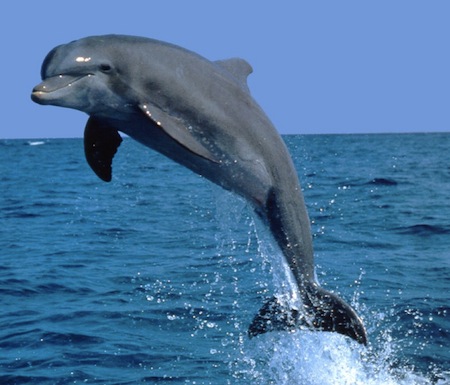
1.    Dogs and dolphins have a homologous structure.  The dolphin and dog seem completely unrelated but they must have had a common ancestor in the past to connect the land mammal to the sea mammal.
The homologous trait in both species is the structure of the dog’s leg and the dolphin’s flipper.  Both have similar bone structures and patterns.  The dog’s bone structure is obviously more conducive of walking, running, and jumping while the dolphin’s flipper is designed for swimming. 
The common ancestor was most likely a sea creature, since life began in the oceans.  The ancestor had the same structures because it is the only way for the two species to have such similar bone structures. 
 

2.    Two species with analogous structures are butterflies and eagles.  The insect and the bird have similar traits but do not have them because of a common ancestor.
The analogous trait are the wings that both animals have.  The butterfly and the eagle can fly but they have different structures behind the means.  The bird has a skeletal system that makes the wings function while the insect’s wings are only comprised of membranes and veins. 
These two creatures do not have this trait because of a common ancestor because we know that birds came from reptiles that did not have wings.  This means that the birds did not get their wings from an ancestor so they are not homologous to the butterfly. 


**Images are from google.com

Thursday, February 18, 2016

Week 2 Post

DNA Strand: 
AGTTACCAAGTTATTATATCCTGATGGACATGCAATCAACCGTGAATCAGT

Thursday, February 11, 2016

Week 1 Post

Georges Cuvier held a strong opposition to what Darwin believed in.  Cuvier did not accept any theory that involved evolution.  Cuvier is credited with founding vertebrate paleontology as a new area of study.  He did not believe in evolution because of his belief that any organism that has a changing anatomy would not be able to survive.  One of the topics that Cuvier did work on was that of the adaptiveness of traits.  Cuvier did not believe that organisms can adapt very well to different environments just because of the way their traits work.  He did not necessarily believe that animals had the ability to change themselves physiologically to adapt.  Cuvier also did not agree with the claim that “individuals do not evolve, populations do.”  He studied mummified cats and compared them to present day cats and could not find any difference.  This led him to believe that not only do individuals not evolve, populations do not evolve either.  He studied different types of elephants and compared them to an extinct mammoth.  He showed that the elephants (which had different physical attributes) were of different species and that neither had a bone structure comparable with that of the ancient mammoth.  I believe that Darwin could still have developed his theory of natural selection without Cuvier’s work.  Darwin may have analyzed vertebrate paleontology in developing his theory so there is a chance that Cuvier’s work could have influenced Darwin.  Darwin and Cuvier did not agree on the theory of evolution.  The attitudes of the church completely went against what Darwin had theorized.  His claims were looked at as being against creationism, and it was strongly opposed.   

Source:  http://www.ucmp.berkeley.edu/history/cuvier.html